- Sains
- Meja Berita
- Source: uk.euleader.org
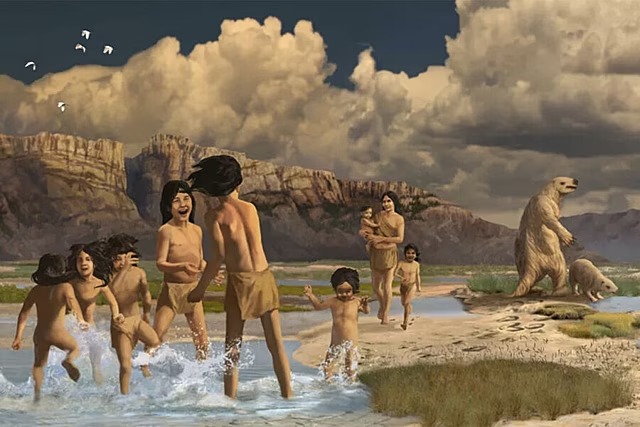
People of the Jomon period (about 14,000 to 300 BC) were able to survive the cold of the Ice Age thanks to genetic adaptations that allowed the body to generate more heat without muscle shivering. This conclusion was made by scientists at the University of Tokyo, who studied 42 ancient genomes. The results are published in the journal Science Advances.
The researchers analyzed the DNA of 25 members of the Jomon culture, which lived in the Japanese archipelago about 5,400-2,300 years ago, and combined this data with 17 previously studied genomes. Scientists have discovered gene variants associated with non-shivering thermogenesis – a process that produces heat primarily in brown adipose tissue.
One of these variants is found in about 73% of cases in Jomon people, while in modern East Asians it occurs in only 17%. This mechanism allows the body to use energy from stored fat directly to create heat, instead of relying solely on muscle shivering.
Additionally, signs of natural selection of gene variants related to body weight and fat metabolism have been found in the archipelago's ancient inhabitants. According to scientists, the combination of these features can both help store energy and use fat to warm the body more effectively.
The researchers also found another interesting similarity: for some genetic variations related to fatty acid processing, the Jomon people were closer to modern Greenland Inuit than to other East Asian peoples. Scientists consider this an example of convergent evolution, in which different peoples acquired similar adaptations to harsh climates.
Analysis of ancient genomes also shows that adaptations to cold were built up gradually. Some variants were present in the ancestral Jomon, and others spread as they moved to colder regions.
Previously, scientists were surprised by an unexpected truth about the travels of ancient people.
 — Seorang kanak-kanak berusia 10 tahun dari Kota Bharu kini mendalami seni wayang kulit selepas bermula dengan tugasan sains Tahun Dua, malah sudah membuat persem
 — Sekumpulan ahli entomologi antarabangsa menemui seekor cengkerik kecil di Hutan Simpan Tangkulap, Sabah yang mungkin spesies baharu dan genusnya belum pernah di
 — Kajian University of Florida mendapati pengguna glukosamin dengan kemerosotan kognitif ringan mempunyai kemungkinan 25% lebih tinggi beralih kepada demensia, na